
- All
- Product Name
- Product Keyword
- Product Model
- Product Summary
- Product Description
- Multi Field Search
Views: 3 Author: BWK Bearing Publish Time: 2026-08-12 Origin: BWK


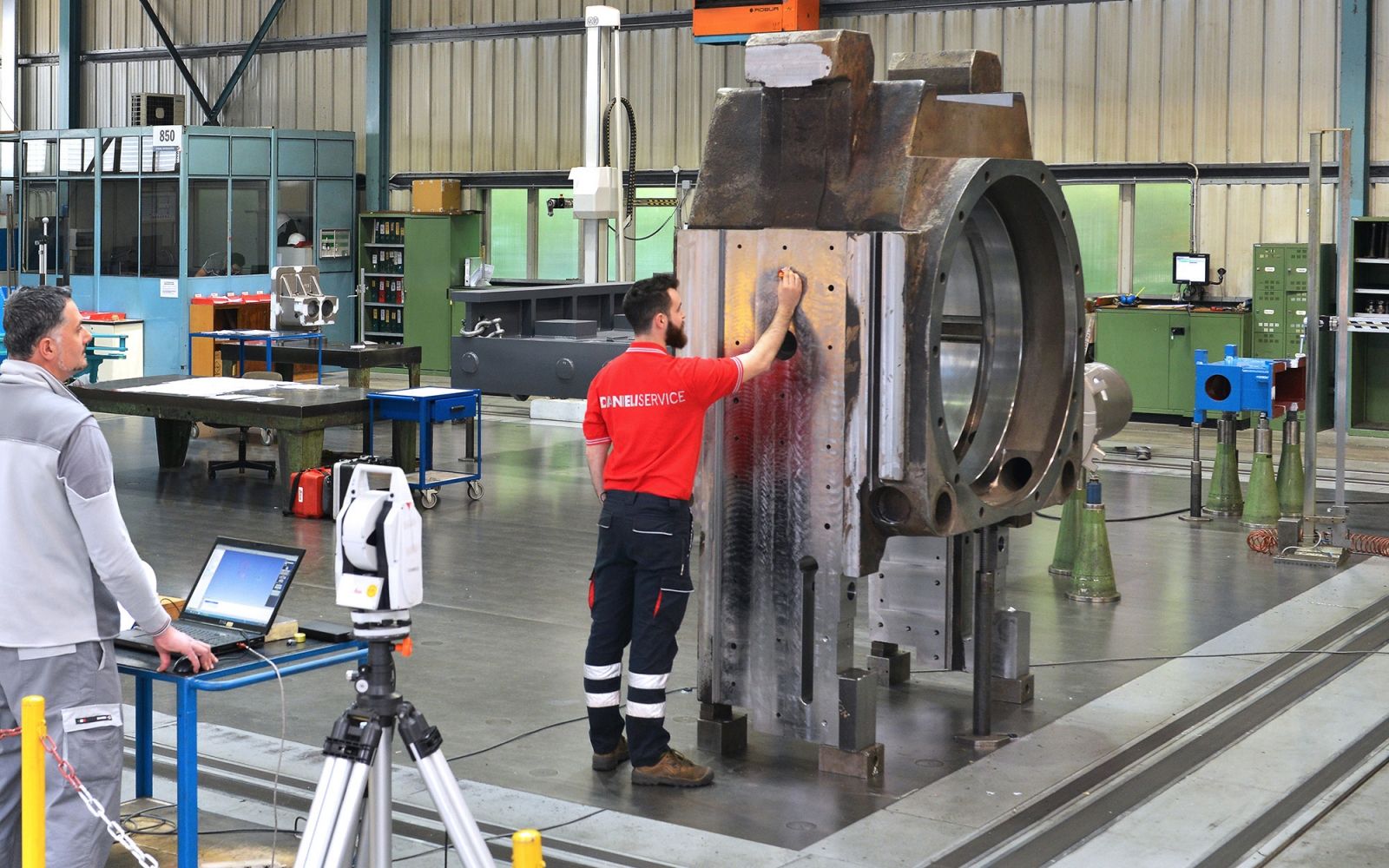
Image source: Primetals Technologies
Rolling mill bearings do more than support a rotating roll. They must keep the roll in the correct position while carrying heavy radial loads, axial forces, shock loads and repeated changes in operating conditions.
This is why there is no single bearing type suitable for every rolling mill position. A bearing that works well on a high-speed work roll may not be the right choice for a heavily loaded backup roll. Before selecting a replacement, it is necessary to understand what load the bearing must carry and how the roll is located inside the stand.
Four-row cylindrical roller bearings are widely used where very high radial load capacity and high rigidity are required. Their large roller-to-raceway contact area supports heavy rolling loads, while the separable design makes mounting, inspection and roll replacement more convenient.
They are commonly installed on work rolls and backup rolls in hot rolling mills, cold rolling mills, bar mills and wire mills. Most designs are used as non-locating bearings and do not carry axial loads, so a separate thrust or locating bearing is normally required.
Best suited to predominantly radial loads
High rigidity and running accuracy
Suitable for relatively high rolling speeds
Separable structure supports frequent roll changes
View BWK four-row cylindrical roller bearings for rolling mills.
Four-row tapered roller bearings can carry high radial loads and axial loads in both directions. This combined load capacity allows one bearing assembly to support the roll and control its axial position, reducing the need for a separate thrust bearing.
TQO, BT4 and similar designs are used mainly on work-roll necks in hot and cold rolling mills. The bearing normally contains matched inner rings, outer rings and spacers. These parts establish the required internal clearance and should remain together as one matched set during mounting and maintenance.
Combined radial and axial load capacity
Compact roll-neck arrangement
Stable axial roll positioning
Suitable for low to moderate rolling speeds
Do not mix rings or spacers from different bearing sets. Correct mounting order, clearance, lubrication and sealing all have a direct effect on service life.

When a four-row cylindrical roller bearing carries the radial load, a thrust roller bearing may be installed separately to handle the axial load. Thrust roller bearings offer high axial capacity and reliable axial guidance, particularly in heavy-duty, low-speed rolling positions.
Thrust ball bearings have relatively low friction and can operate at higher speeds, but their axial load capacity is lower than that of thrust roller bearings. They may be used where axial force is moderate, available space is limited and shock loading is not severe.
Some high-speed rolling positions require accurate axial guidance with limited friction. Angular contact ball bearings can carry combined loads and provide precise axial location when correctly arranged as a pair or set. Selection must consider contact angle, arrangement, preload or clearance, lubrication and axial-load direction.
Spherical roller bearings carry heavy radial loads, axial loads in both directions and tolerate misalignment between the shaft and housing. They remain useful in pipe mills, auxiliary rolling equipment and other positions with moderate speed requirements. Their self-aligning ability comes with lower limiting speed and less precise axial guidance than bearing arrangements designed specifically for high-speed rolling.
Two products described as rolling mill bearings may operate under completely different conditions. Before comparing models, identify the actual bearing position and operating requirement:
Work roll, intermediate roll or backup roll
Locating or non-locating position
Radial load only or combined radial and axial load
Hot mill, cold mill, bar mill, wire mill or pipe mill
Continuous operation or frequent roll replacement
Existing bearing number
Bore, outside diameter and total width
Roll-neck and bearing-housing drawing
Roll position and rotation speed
Radial and axial loads
Lubrication method
Operating temperature and contamination conditions
Required internal clearance and precision grade
If the original bearing number is unavailable, clear photos of the markings, ring arrangement and housing can also help with identification.
Matching d × D × B dimensions is only the first step. Internal design, clearance, cage type, load direction, lubrication and sealing conditions must also be confirmed.
BWK supplies rolling mill bearings for work rolls, backup rolls and metallurgical equipment, including four-row cylindrical roller bearings, four-row tapered roller bearings and separate locating arrangements. Send the existing bearing number, dimensions, drawing or application details to BWK for model confirmation and quotation.
BWK provides reliable bearing solutions for industrial and agricultural applications, supported by stable supply, strict quality control and flexible OEM & ODM services.
